


General Meeting
Astronomy Fundamentals Meeting
Next (ONLINE): Thursday, April 9, 2026
6:30 – 8:00 PM

Come join us for a presentation from the fundamentals of amateur astronomy. Learn your way around the night sky to add to your observing enjoyment. Meetings are on the second Thursday of each month.
You can find our past recordings on the Club’s YouTube channel
https://www.youtube.com/playlist?list=PLXbeCAsGDdSZlqE0IAEUBmZxvmCUJi5Tr
Contact: Connor Justice
Email: fundamentals[at]tucsonastronomy.org
Tucson Astronomy Festival
October 17 @ 3:00 pm – 9:00 pm
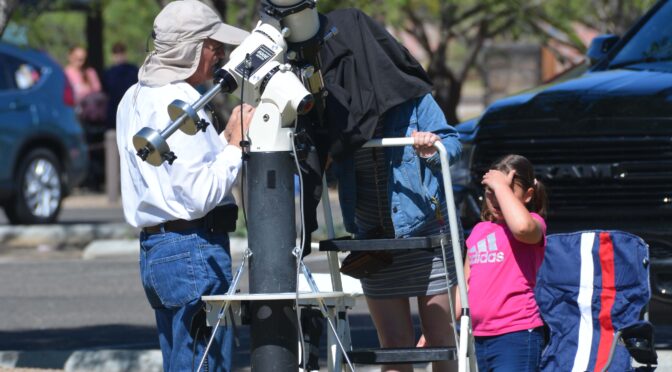
The Tucson Amateur Astronomy Association will host their annual Tucson Astronomy Festival October 17, 2026 at Brandi Fenton Memorial Park in Tucson, AZ from 3 to 9 PM. This is a free family-fun event. Activities include safe telescope observing of the sun and interactive astronomy exhibits in the afternoon, door prize drawing at 5:30 pm (must be present to win) to include a telescope, and Night sky observing of our amazing universe in the evening. The public are encouraged to bring their telescope to receive assistance in set up and operation.
Free
Stargazing at Tubac Presidio State Historical Park
October 16 @ 6:30 pm – 8:30 pm
Join us at the Tubac Presidio State Historical Park in Tubac AZ for an evening of stargazing under truly dark skies at an historic location.
TAAA will have volunteer astronomers with Telescopes setup and viewing Planets,
Nebulas, Galaxies, Star Clusters and more, under the dark skies of Southern Arizona!
For more information check out:
Events | Tubac Presidio State Historic Park and Museum
Star Party is free but event is for Tubac Presidio Members only. Membership is available for non-members of the Presidio at the main entrance/gift shop.
Weather dependent. For real-time updates, follow this event on the Tucson Amateur Astronomy Association Facebook Events Page: https://www.facebook.com/TucsonAstronomy/events
Bernie Stinger
612-396-8839
astronomy-events@tucsonastronomy.org
Stargazing at Tucson Mountain Park – Juan Santa Cruz Picnic Area
October 16 @ 6:30 pm – 8:30 pm
Star Party @ Tucson Mountain Park – Juan Santa Cruz Picnic Area
Tucson, AZ (right next to Sonoran Desert Museum)
Viewing Location: Small side loop on East side of main loop.
Information: Great dark skies in Western Tucson. Star Party open to the Public. Cost: FREE.
Tucson Amateur Astronomy Association will have several telescopes for astronomical viewing. We will observe Planets, Nebulae, Galaxies, Star Clusters and lots more. Great opportunity to look through a variety of telescopes. Weather dependent.
For real-time updates, follow this event on the Tucson Amateur Astronomy Association Facebook Events Page: TAAA Facebook Events page
Event is FREE but REGISTRATION IS REQUIRED. To Register go to: www.DiscoverNature.pima.gov Then Log in or Create an account. Once logged in click on the “Environmental Education Programs” square. You should get the Pop-up screen “Register for a Program”. Scroll down to the event on the list or type in “Stargazing” into the keyword search. Once you find your event click on the “Register” button to the right. You must be logged in for the Registration screen to work.
Bernie Stinger
612-396-8839
astronomy-events@tucsonastronomy.org
Stargazing at Catalina State Park
October 10 @ 6:30 pm – 8:30 pm
Star Party at Catalina State Park – Tucson, AZ
Viewing Location: Trailhead Picnic area at end of road inside the park.
Great dark skies just north of Tucson at Catalina State Park.
Star Party open to the Public. Admission fee for entrance into Catalina State Park.
Tucson Amateur Astronomy Association will have approximately 10 telescopes for astronomical viewing.
We will observe Planets, Nebulae, Galaxies, Star Clusters and lots more. Great opportunity to look through a wide variety of telescopes.
Weather dependent. For real-time updates, follow this event on the Tucson Amateur Astronomy Association Facebook Events Page ((4) Tucson Amateur Astronomy Association | Facebook).
Additional details will be posted here and on Facebook as we get closer to the event.
Bernie Stinger
612-396-8839
astronomy-events@tucsonastronomy.org
Stargazing at Chiricahua National Monument
October 9 @ 6:30 pm – 8:30 pm
Join TAAA for an evening of stargazing to view amazing solar system and deep sky objects from a truly Dark Sky Park. You will see planets, nebulae, star clusters, double stars, galaxies millions of light years away, and lots more. We will have several telescopes for public viewing.
Observing location will be at the Faraway Ranch, just past the entrance gate about 1/2 mile. Follow signs in the park for public parking. The event is free of charge, no reservations are required. Please try to use red light flashlights and minimize white light (to include cell phones) that will hinder your night vision.
Chiricahua National Monument website: https://www.nps.gov/chir/index.htm.
Weather dependent — Follow the event on the TAAA Facebook page to get weather and other updates: https://www.facebook.com/TucsonAstronomy/.
Check back here or on our Facebook page closer to the event for any updates.
Bernie Stinger
612-396-8839
astronomy-events@tucsonastronomy.org
Star Party for Southwest Skies Astronomy Festival (night 2 of 2)
October 3 @ 7:30 pm – 9:00 pm
Join the Tucson Amateur Astronomy Club in conjunction with the Fred Lawrence Whipple Observatory for our second of two nights observing the wonders of the night sky.
Night 2 telescope viewing will be on the rooftop of at the Green Valley Recreation Center in Santa Rita Springs. We plan to have at least 10 telescopes with operators setup for this event and expect a large turnout. Ample parking will be available.
No registration is required.
More information will be posted here as it is made available.
Bernie Stinger
612-396-8839
astronomy-events@tucsonastronomy.org
Star Party for Southwest Skies Astronomy Festival (night 1 of 2)
October 1 @ 7:30 pm – 9:00 pm
Join the Tucson Amateur Astronomy Club in conjunction with the Fred Lawrence Whipple Observatory for our first of two nights observing the wonders of the night sky. (Night 2 on Oct. 3rd)
Night 1 will be at the Community Performance and Art Center (CPAC) in Green Valley, AZ and will follow the lectures at the Center.
No registration is required.
Exact setup location for the telescopes will be determined and posted here.
Bernie Stinger
612-396-8839
astronomy-events@tucsonastronomy.org
TAAA Monthly General Meeting: Talk: TBD.
December 4 @ 6:30 pm – 8:00 pm
Monthly TAAA General Meeting at Steward Observatory Lecture Hall at the University of Arizona. Open to members and the public. We tap into some great astronomy and science lectures. Active Members will receive a Zoom Link to attend by Zoom if desired. The meeting will also be streamed live to our TAAA YouTube Channel: https://www.youtube.com/@tucsonamateurastronomyasso2702/streams
Free
TAAA Monthly General Meeting. Talk: TBD.
November 6 @ 6:30 pm – 8:00 pm
Monthly TAAA General Meeting at Steward Observatory Lecture Hall at the University of Arizona. Open to members and the public. We tap into some great astronomy and science lectures. Active Members will receive a Zoom Link to attend by Zoom if desired. The meeting will also be streamed live to our TAAA YouTube Channel: https://www.youtube.com/@tucsonamateurastronomyasso2702/streams
Free
TAAA Monthly General Meeting. Talk: Training for members on Policy for Working with Minors. Outreach Awards.
October 2 @ 6:30 pm – 8:30 pm
Monthly TAAA General Meeting at Steward Observatory Lecture Hall at the University of Arizona. Open to member and the public. We tap into some great astronomy and science lectures through the University of Arizona and other great sources to include our own members.
Free